How to Buy World Cup 2026 Tickets Safely: Step-by-Step Guide for International Fans
The FIFA World Cup 2026 is shaping up to be the biggest sporting event in history. Hosted across three nations — the United States, Mexico, and Canada — this tournament will feature 48 teams, 104 matches, and 16 host cities spread across North America. For international fans dreaming of witnessing the action live, securing tickets safely is the first and most critical step of the journey.
Unfortunately, major sporting events also attract scammers, counterfeiters, and unauthorized resellers who prey on eager fans. Every World Cup cycle sees thousands of supporters lose money to fraudulent ticket schemes. This comprehensive guide walks you through the entire process of buying World Cup 2026 tickets safely, from creating your FIFA account to walking through the stadium gates on match day.
Official FIFA Ticketing Channels and Expected Sales Phases
FIFA is the sole authorized seller of World Cup tickets, and all legitimate purchases must go through the official FIFA ticketing platform at FIFA.com/tickets. No third-party website, travel agency, or social media seller is authorized to sell World Cup tickets independently.
FIFA typically releases tickets in multiple sales phases:
- Early Sales Phase (Ballot/Lottery System): Fans submit applications during a designated window, and tickets are allocated through a random selection draw. This phase usually opens 12–18 months before the tournament. Demand far exceeds supply, so not everyone receives tickets.
- First-Come, First-Served Sales Phase: After the ballot phase, remaining tickets go on sale in real-time. These sell out rapidly, sometimes within minutes for popular matches.
- Last-Minute Sales Phase: A final batch of tickets is typically released a few weeks before the tournament begins, often including returns, cancellations, and previously reserved inventory.
- Conditional Sales: Some tickets are sold before the group stage draw, meaning you select a venue and stage of the tournament without knowing which teams will play.
Bookmark the official FIFA ticketing page and sign up for FIFA email notifications so you never miss a sales window.
How to Create and Verify Your FIFA Account Safely
Before purchasing tickets, you must create a FIFA account (also called a FIFA Ticket Account or FIFA ID). Here is how to do it safely:
- Visit FIFA.com directly. Type the URL manually into your browser rather than clicking links from emails or social media posts.
- Register with accurate personal details. Your name must match your passport or government-issued ID exactly. Mismatches can result in denied entry at the stadium.
- Use a strong, unique password. Combine uppercase letters, lowercase letters, numbers, and symbols. Do not reuse passwords from other accounts.
- Enable two-factor authentication (2FA). If FIFA offers this option, activate it immediately to add an extra security layer.
- Verify your email address. Complete the email verification step as soon as you register to ensure your account is fully functional before sales open.
- Upload identification documents early. FIFA may require passport scans or other ID verification. Complete this step well ahead of ticket sales to avoid last-minute complications.
Never share your FIFA account credentials with anyone, including friends, family, or third-party “ticket agents” who offer to buy tickets on your behalf.
Payment Methods, Currency, and International Transaction Tips
FIFA accepts major international payment methods, typically including Visa credit and debit cards (Visa is usually an official FIFA partner), Mastercard, and sometimes other options like bank transfers for specific markets.
Key tips for international transactions:
- Check your card’s international transaction fees. Some banks charge 1–3% for foreign currency purchases. Contact your bank beforehand to understand potential surcharges.
- Notify your bank before purchasing. Large international transactions can trigger fraud alerts, causing your payment to be declined at the worst possible moment.
- Prices are typically listed in USD for the 2026 tournament, given the primary host country is the United States. Budget accordingly based on current exchange rates.
- Keep all confirmation emails and payment receipts. These serve as proof of purchase if any disputes arise later.
- Avoid using public Wi-Fi when making purchases. Use a secure, private internet connection to protect your financial information.
Ticket Categories, Pricing Ranges, and What’s Included
FIFA World Cup tickets are divided into multiple categories based on seating location within the stadium:
- Category 1: Best seats in the house — typically midfield, lower tier. These are the most expensive.
- Category 2: Good views, slightly off-center or upper-tier midfield locations.
- Category 3: Behind the goals or upper-tier corner sections. More affordable but still inside the stadium.
- Category 4 (if available): Exclusively reserved for residents of the host country at reduced prices. International fans typically cannot access this category.
Expected pricing ranges for 2026 (based on historical trends and inflation adjustments):
- Group stage matches: $70–$300+ depending on category
- Round of 16: $100–$400+
- Quarter-finals: $175–$500+
- Semi-finals: $250–$800+
- Final: $400–$1,500+
Your ticket includes entry to the match and access to the FIFA Fan Festival areas around the stadium. It does not include transportation, accommodation, or meals. Some premium hospitality packages are sold separately through FIFA’s official hospitality partner and include VIP seating, catering, and exclusive lounge access at significantly higher prices.
How to Avoid Scams: Resale Red Flags, Phishing, and Unofficial Sites
Scammers become incredibly active during World Cup ticket sales. Protect yourself by watching for these red flags:
- Unofficial websites mimicking FIFA. Scammers create websites with URLs that look similar to FIFA.com. Always verify you are on the authentic site.
- Social media sellers. Anyone selling tickets on Facebook, Instagram, X (Twitter), or WhatsApp is almost certainly operating outside FIFA’s authorized channels. These tickets may be fake, duplicated, or nonexistent.
- Prices that seem too good to be true. If someone offers Category 1 final tickets at face value or below, it is very likely a scam.
- Pressure tactics. Scammers create urgency with phrases like “only 2 left” or “price increases in 1 hour.” FIFA’s official platform communicates transparently about availability.
- Requests for unusual payment methods. Wire transfers, cryptocurrency, gift cards, or payments through informal apps are major warning signs.
- Phishing emails. You may receive emails that appear to come from FIFA, asking you to “confirm your ticket order” or “update payment details.” These emails contain malicious links. Always log into your FIFA account directly through your browser instead of clicking email links.
Golden rule: If you did not buy it from FIFA.com/tickets or FIFA’s designated official resale platform, it is not a guaranteed legitimate ticket.
Resale Platforms and Transfer Rules
FIFA typically operates an official ticket resale platform where fans who can no longer attend can resell their tickets at face value to other registered fans. This is the only safe way to buy resold tickets.
Key points about resale and transfers:
- Tickets are non-transferable outside the official platform. You cannot simply give or sell your ticket to someone else informally.
- Resale prices are capped at face value on the official platform. There is no markup.
- Both the seller and buyer must have verified FIFA accounts.
- Unauthorized resale (scalping) violates FIFA’s terms and conditions and may result in ticket cancellation without refund.
Mobile Tickets, ID Requirements, and Entry-Day Best Practices
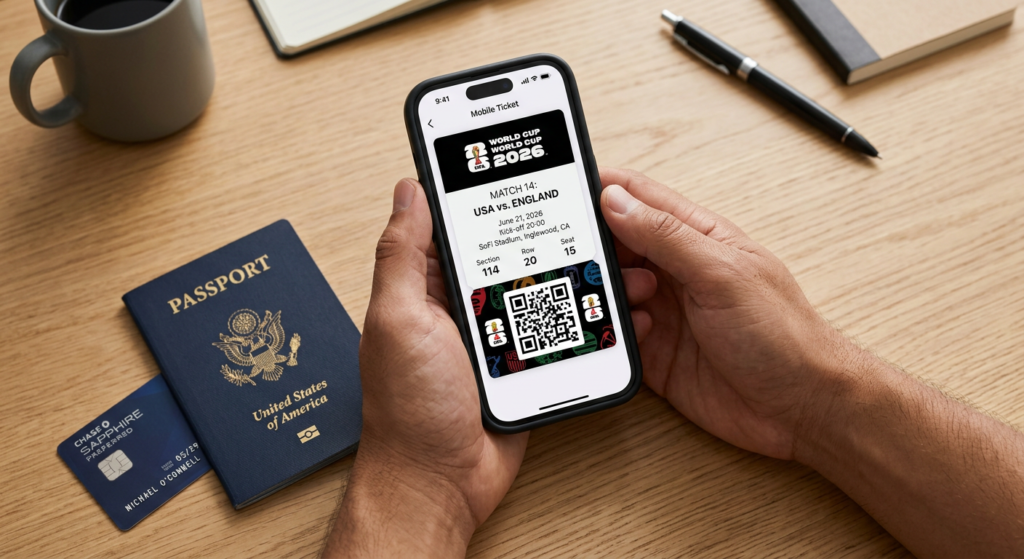
FIFA has been moving toward fully digital, mobile-only ticketing. For 2026, expect your ticket to be delivered as a mobile ticket linked to your FIFA account and accessible via the official FIFA app.
Entry-day essentials:
- Bring your passport or government-issued ID that matches the name on your ticket. No exceptions.
- Download the FIFA app and ensure your mobile ticket is loaded before arriving at the stadium. Do not rely on stadium Wi-Fi.
- Charge your phone fully and consider carrying a portable power bank.
- Arrive early. Security screenings at World Cup venues are thorough. Plan to arrive at least 90 minutes before kickoff.
- Know the prohibited items list. Large bags, professional cameras, outside food and beverages, and various other items are typically banned.
Refunds, Cancellations, and Force Majeure Policies
FIFA provides a structured refund policy:
- Voluntary cancellations are sometimes permitted during specific windows, with refunds processed minus administrative fees.
- Match cancellations or venue changes due to force majeure (natural disasters, pandemics, security threats) are typically covered. FIFA will offer refunds or alternative match tickets.
- Refunds are returned to the original payment method and may take several weeks to process.
Read FIFA’s terms and conditions thoroughly at the time of purchase so you understand your rights and obligations.
FAQs for International Fans
Do I need a visa to attend the World Cup?
It depends on your nationality. The U.S., Mexico, and Canada each have different visa requirements. Check with the respective embassies well in advance and apply early.
Are travel packages available?
FIFA and its authorized hospitality partners offer official travel and hospitality packages that bundle tickets with accommodation and transportation. These are legitimate but come at premium prices.
Can I buy tickets for a group?
Yes, FIFA allows group ticket applications during the ballot phase. Each group member must have their own verified FIFA account.
What happens if my team doesn’t qualify?
If you purchased conditional tickets tied to a specific team that fails to qualify, FIFA typically offers refunds or alternative options.
Final Thoughts
Buying World Cup 2026 tickets safely boils down to one principle: stick to official channels at every step. Create your FIFA account early, verify your identity, set up payment methods in advance, and never purchase from unauthorized sources no matter how tempting the offer appears. The World Cup is a once-in-a-lifetime experience for many fans. Do not let scammers steal that dream. Plan smart, stay vigilant, and get ready to celebrate the beautiful game across North America in 2026.